Adolf Wölfli
A 25,000-page universe of words, pictures and music, made in a Swiss clinic.
The UK guide to art made outside the art world
Art brut, visionary environments and the people who made them, from Adolf Wölfli and Madge Gill to Ron's Place in Birkenhead, plus the story of graffiti in the UK. Clearly explained, with sources on every guide.
Outsider art is art made by self-taught people working outside the official art world of art schools, galleries and dealers. Many of its makers never called themselves artists, and much of their work was found only late in life or after they died.
The idea began in France in 1945, when the painter Jean Dubuffet coined the term art brut, "raw art", for work by psychiatric patients, mediums, prisoners and isolated people. In 1972 the British critic Roger Cardinal translated it as "outsider art".
Today the term covers everything from pen drawings on scraps of paper to whole buildings transformed by one person, and it is fiercely debated. We explain it all, and the graffiti tradition that grew up alongside it on Britain's walls.
Five ways into the subject, from the big ideas to the walls of Bristol.
 Understanding outsider art
What outsider art is, where the idea came from, and why the label itself is argued over.
 Outsider artists
Profiles of the self-taught artists at the heart of outsider art, from Bern and Chicago to East London and Montgomery…
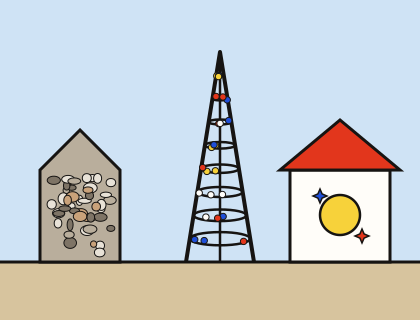 Visionary environments
Palaces, towers, gardens and flats transformed, often over decades, by one determined person.
 Seeing and collecting
Museums, galleries, fairs, books and films, and how to buy outsider art responsibly.
 Graffiti in the UK
How graffiti arrived in Britain, the cities and crews that shaped it, and where to see it today.
In-depth, sourced guides to outsider art and the people who made it.
Self-taught artists whose work changed what we think art can be.
A 25,000-page universe of words, pictures and music, made in a Swiss clinic.
The East London medium who drew for her spirit guide, Myrninerest.
A secret 15,000-page epic, found in a rented room in Chicago.
Born into slavery, he began drawing on a Montgomery pavement at about 85.
Fibre sculptures that gave a voice to an artist who never spoke.
Trains, tunnels and horsemen drawn on scraps of paper in California.
Short, sourced answers to the things people most often want to know.
Outsider art is art made by self-taught people working outside the mainstream art world of art schools, galleries and dealers.
The French artist Jean Dubuffet coined the term art brut ("raw art") in 1945.
The British art historian Roger Cardinal coined the term "outsider art" in 1972, as the title of his book introducing art brut to English readers.
The Collection de l'Art Brut opened in Lausanne in February 1976 and held more than 70,000 works at its 50th anniversary in 2026.
The Musgrave Kinley Outsider Art Collection at the Whitworth, Manchester, has more than 1,150 works by around 130 artists and is the largest collection of its kind in a UK public gallery.
Ron's Place in Birkenhead was listed Grade II on 19 March 2024, the first example of outsider art to be nationally listed in England.
Source: Wikipedia: Ron's Place
Art you can walk into
Some outsider art is too big for a wall. A visionary environment is a home, garden or plot of land transformed, usually by one person over many years, into a single work of art, often from stones, broken crockery and cement.
They are among the most fragile kinds of art. Many have been demolished; the survivors often owe everything to campaigners.
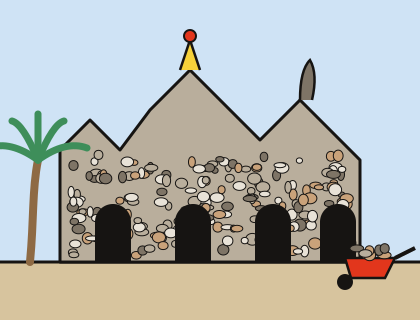
France
A postman's palace of stones, built from 1879 to 1912.
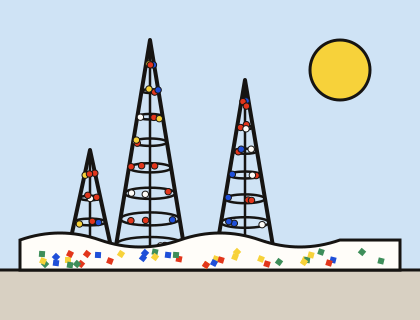
Los Angeles
Spires nearly 30 metres high, built by hand from 1921 to 1954.
India
Thousands of figures made from waste, built in secret.
Birkenhead
England's first listed outsider art environment, in 2024.
From asylum collections to a statue on Pall Mall. Every date is sourced.
1871
The medium Georgiana Houghton shows 155 abstract "spirit drawings" in a London gallery. The show nearly ruins her.
1879
Ferdinand Cheval begins his Palais Idéal at Hauterives, France. He finishes it 33 years later, in 1912.
1908
At the Waldau clinic near Bern, Adolf Wölfli starts his 25,000-page imaginary autobiography.
1920
On 3 March, the East London artist says a spirit guide takes over her drawing hand.
1921
The Watts Towers rise in Los Angeles over the next 33 years.
1922
Hans Prinzhorn publishes his illustrated study of patients' art from Heidelberg, which inspires the Surrealists.
How a New York art form crossed the Atlantic and became part of British culture.
Slogans, jokes and campaigns, from "Clapton is God" to George Davis.
Early 1980s: Wild Style and Style Wars inspire the first writers.
Bristol's 3D, London's Chrome Angelz and the Underground.
The 1990s and 2000s turn graffiti into street art.
Upfest, Nuart and Hit the North bring the world's artists here.
From a youth club in Barton Hill to Banksy and Upfest: how one city produced the UK's most famous street artists, and where to see their work today.
Exhibitions ·
The world's first museum of art brut opened in Lausanne in February 1976. Fifty years on, here's what its anniversary programme offers and why the museum still matters.
Graffiti ·
Overnight in April 2026, a statue of a suited man blinded by his own flag appeared among the monuments of Pall Mall. Banksy confirmed it was his.
Places ·
The UK's biggest public collection of outsider art and its first listed outsider art environment are about an hour apart. Here's how to see both.
Outsider art is art made by self-taught people working outside the mainstream art world, often with no training and no intention of exhibiting. The British critic Roger Cardinal coined the term in 1972 as an English equivalent of the French art brut. Read the full introduction.
Art brut is Jean Dubuffet's original 1945 term and is used strictly for art he believed was untouched by artistic culture. Outsider art is the broader English term introduced in 1972, now used for almost any self-taught art made outside the art world. All art brut is outsider art, but not all outsider art is art brut. Compare the terms.
The best known include Adolf Wölfli, Henry Darger, Madge Gill, Aloïse Corbaz, Martín Ramírez, Bill Traylor, Scottie Wilson and Judith Scott, along with builders of environments such as Ferdinand Cheval and Simon Rodia. Meet the artists.
The largest public collection is the Musgrave Kinley Outsider Art Collection at the Whitworth in Manchester. You can also visit Bethlem Museum of the Mind in Beckenham, Wellcome Collection in London, Pallant House Gallery in Chichester and, by arrangement, Ron's Place in Birkenhead. Full guide.
A visionary environment is a home, garden or site transformed by one person, usually self-taught, into a single work of art. Famous examples include the Palais Idéal in France, the Watts Towers in Los Angeles and Nek Chand's Rock Garden in India. Read more.
Yes, without the permission of the owner of the surface. In England and Wales it is criminal damage under the Criminal Damage Act 1971; in Scotland it is usually prosecuted as vandalism. With the owner's permission, graffiti and murals are legal. Graffiti and UK law.
Outsider art and street art news worth reading. No spam; unsubscribe whenever you like.